Unfolded· 7 min read·18 July 2026
A Jeweller's Studio in Lima
A private appointment at the jeweller's studio — the work, the conversation, and the piece that arrives at home forty days after the trip.
By Kada Travel Editorial
A bracelet survives its maker differently than a painting does. A painting hangs in a room and is encountered occasionally, from a distance, by whoever enters. A bracelet is worn against the skin, touched daily, taken off and put back on, present for the small decisions of the morning. The relationship between a piece of jewellery and the person who wears it is more intimate, and more continuous, than any other relationship between a made object and a human being — and this is the fact that explains why a studio visit with a jeweller is a different kind of encounter than a visit to an artist's studio or a craftsperson's workshop.
At the jeweller's studio in Lima, the appointment begins with work that has already been completed and work that has not. The conversation moves between them.
The Studio
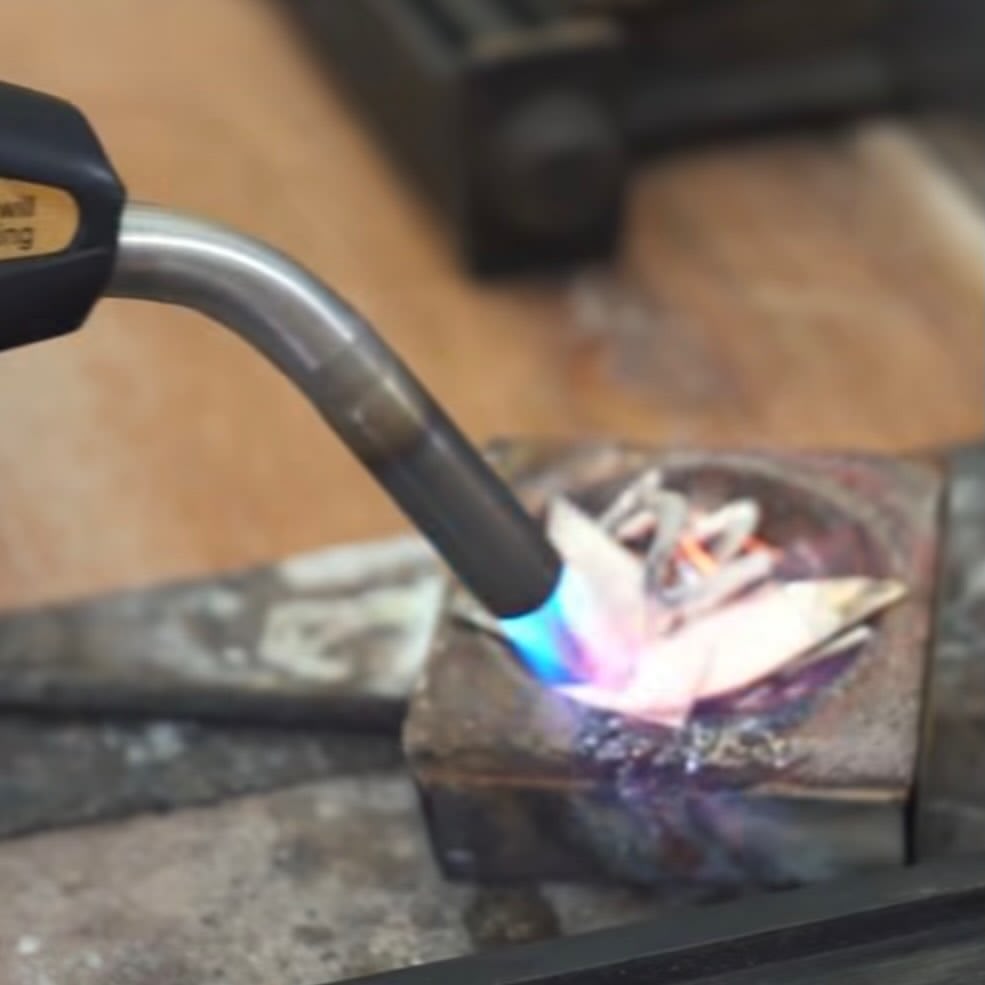
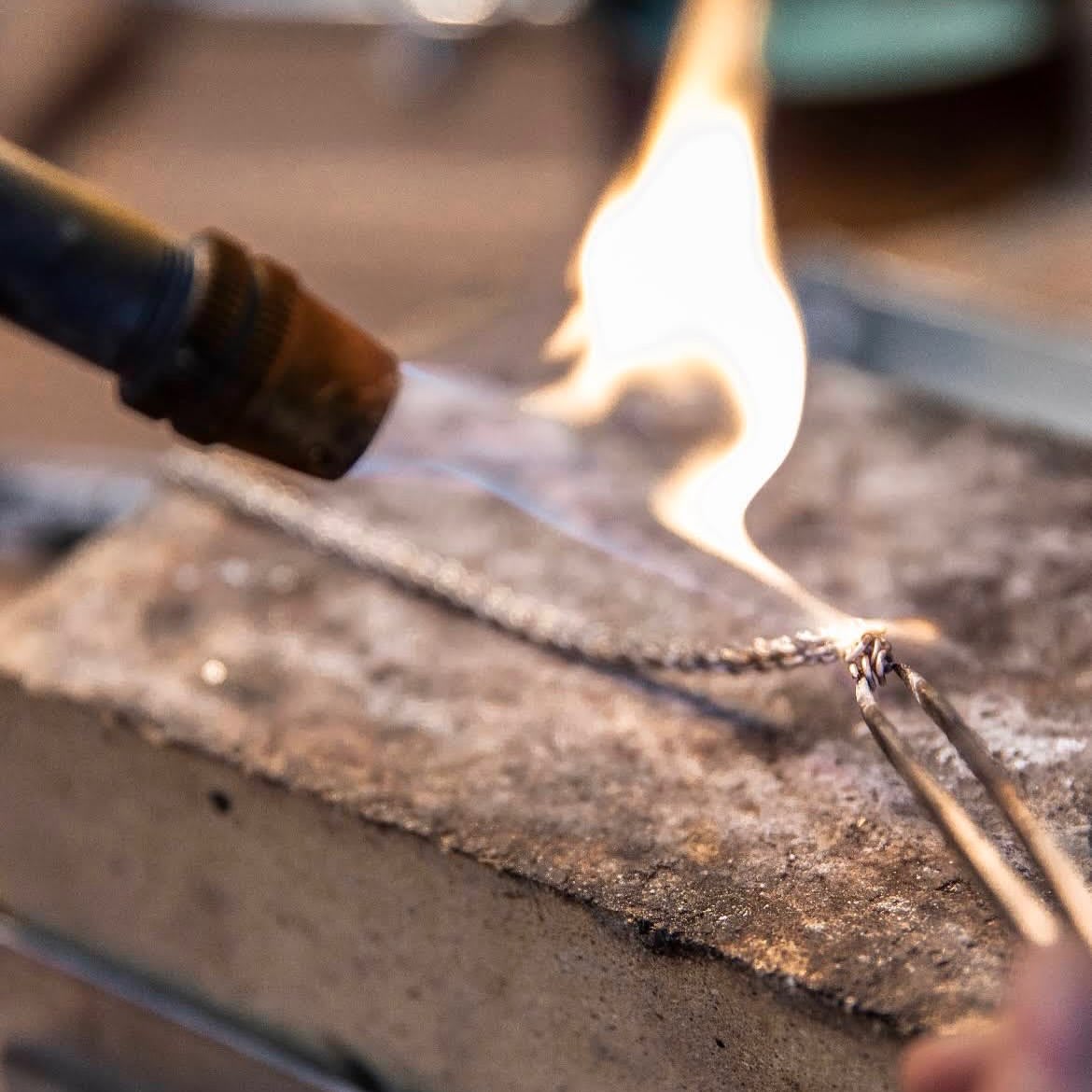
The jeweller is one of Lima's most considered contemporary jewellery designers — a practitioner whose work is in the collection of private buyers across Europe and the Americas, and whose presence in the Lima design circuit is a reference point for anyone thinking seriously about what contemporary Peruvian jewellery can be. Her studio is a working space, not a showroom: the tools are on the bench, the pieces in progress are not arranged for presentation, and the silver and gold are in their intermediate states — wire, sheet, cast forms, soldered joints — that reveal the construction logic the finished piece disguises.
The studio reflects its owner's approach: formally rigorous, materially honest, concerned with the relationship between geometric abstraction and the weight and warmth of precious metal. The jeweller's work is architectural in its sensibility — pieces that function as small buildings for the body, with load-bearing structures and interior spaces and an interest in how light moves across a surface differently at different angles. The reference points she draws from include pre-Columbian Peruvian goldsmithing — the Chimú tumi and its precise inlay, the Moche earspool and its mathematical disc — and the twentieth-century abstract sculpture she encountered in formal study outside Peru. The two traditions inform each other in her practice without either dominating.
The silver she works with is Peruvian. This is not incidental: Peru is one of the world's leading silver producers, and the material that enters the jeweller's studio is refined from ore extracted from the same Andean mountains visible on the flight from Lima to Cusco. The metal's provenance is not a marketing claim in her work; it is the starting point of a conversation about what it means to make with materials that are specifically of this place.
The Work
The current pieces in the studio shift as commissions are completed and new projects begin. The appointment at any given moment is therefore specific to what the jeweller is working on — which is another argument for the studio visit over the boutique appointment. A boutique holds the range of available finished pieces; the studio holds the current argument. Both are the jeweller's work. Only one is still in conversation with itself.
The finished pieces in the studio range from rings and earrings to bracelets and neckpieces — each proportioned for the scale at which it will be seen: a neckpiece is designed to be seen from across a room and to reveal its detail at close range; a ring is designed to be seen from the hand's distance and to shift across the finger's movement. The structural thinking in each piece is visible in its making: joints that are not hidden but incorporated, solder lines that become part of the visual logic, surfaces that are not polished to uniformity but finished to show the decision about surface that was made at each stage.
The gold pieces — a smaller part of the studio's output but, when present, the most revealing of the jeweller's relationship to colour — are typically worked in eighteen-carat yellow gold, which holds a warmth against skin that white metals do not. The jeweller uses gold for pieces where that warmth is part of the design logic: the metal and the body in a relationship where temperature is the medium.
The Commission
The most significant thing that happens in some appointments at this studio is not the conversation about the existing work. It is the commission.
The arc is simple, and it is the arc that makes the Lima studio visit different from buying a piece in a gallery: our guests see the current work, understand the jeweller's approach, and decide — sometimes immediately, sometimes in the days after — that they want something made for them. The commission conversation happens at the studio or by correspondence afterward; the piece is made in the four to eight weeks following the visit, while our guests have returned home, settled back into their ordinary life, and begun the particular form of forgetting that travel enforces. The piece arrives in a small package — carefully packaged, with the documentation of its materials and the jeweller's mark — approximately forty days after they left Lima.
The timing is not accidental. A commission begun during a journey and completed after it creates a different relationship between the trip and the object than a purchase made on the last day does. The purchase is a souvenir — it stands for the trip in the way a souvenir is supposed to. The commission is a continuation: the trip is still happening, in a small studio in Lima, in the form of a piece that does not exist yet, that will exist by the time the memory of the trip has begun to settle into its permanent form.
What Kada Arranges
The private appointment at the jeweller's studio is confirmed with the jeweller directly, typically two to three weeks before the visit. The appointment runs sixty to ninety minutes — long enough for the work to be shown properly and for a commission conversation to develop if our guests want it to. We do not arrange studio visits for guests whose primary interest is purchasing a finished piece without discussion; if the interest is in acquiring work rather than encountering it, we facilitate that differently.
For guests who have also visited Dédalo during their Lima stay, we position the studio appointment on a different morning — both experiences are about contemporary Peruvian craft at its most serious, and the distinction between them (Dédalo as a curated collection of multiple practices; the studio as a single practice in its source) is clearest when they are encountered separately rather than as a single long morning.
Expert Insight
"The commission is what I most want guests to understand before they arrive. It is not 'ordering something.' It is beginning a relationship with an object that doesn't exist yet — that will be made, specifically, in response to the conversation that happens in that studio. I have had guests receive their piece at home and write to say it changed how they remember the trip. Not what the piece looks like: the fact that the trip is still making something, even after they've left."
— Isabela Santos, Senior Travel Designer, KADA Travel
A Practical Note
The studio is a working space and appointments are held during working hours — typically mid-morning to midday on weekdays. The jeweller manages her appointment schedule around production commitments; we confirm the specific date and time with her directly rather than holding a standing slot. This is not a limitation; it is the condition under which the appointment is genuine rather than performative. A studio that receives visitors on a fixed schedule has already adjusted itself for visitors; a studio that receives them around production has not.
For guests who commission a piece during the visit, we manage the subsequent communication — production updates, delivery logistics, customs documentation for pieces travelling internationally. The jeweller's preferred communication is by email; for guests who want more frequent updates during the production period, we act as intermediary so the jeweller can work without administrative interruption.

Written by Kada Travel Editorial
Frequently Asked
No. The most productive appointments happen with guests who have a genuine curiosity about how something is made — about the relationship between the tool, the material, and the finished form — rather than with guests who arrive with a catalogue knowledge of the jeweller's body of work. The studio visit is an encounter with a practice, not a biography.
Commissions vary significantly depending on material (silver or gold), complexity, and scale — from smaller ring and earring commissions in the several-hundred-dollar range to neckpieces and bracelets in the several-thousand-dollar range. We provide indicative price guidance when we arrange the appointment, so guests arrive with a realistic sense of the range. All prices are quoted in USD at the studio; payment arrangements are handled directly between our guests and the jeweller.
Typically four to eight weeks from confirmation of the brief and receipt of the deposit. Simpler commissions (rings, small earrings) run toward the shorter end; complex neckpieces or pieces incorporating both gold and silver elements run toward the longer end. The jeweller provides a production estimate at the commission conversation, which we confirm in writing afterward.
Yes. The studio holds a selection of finished pieces that are available for immediate purchase — work completed from previous projects or from the jeweller's own design development. We note this at the briefing so guests arrive knowing the full range of options available to them.
Design Your Journey
Design your bespoke Peru journey
We talk. We listen. Then we design an itinerary that belongs only to you.
Start Planning