Experiences· 7 min read·1 February 2025
Luxury Community Tourism: Chinchero and Patabamba Weavers
Visiting Quechua communities with premium service — without turning the encounter into tourist transaction.
By Kada Travel Editorial
There is an apparent contradiction between "luxury tourism" and "community tourism". The first is usually associated with five-star hotels and isolation; the second with peasant-family nights without continuous hot water. This guide proposes that the contradiction is false: there is a community-tourism version that combines authentic visits with premium service, where the traveller staying at Sol y Luna or Belmond spends four hours with Quechua weavers and returns to the hotel for dinner. What matters is the quality of the visit, not lodging rusticity.
Why Chinchero and Patabamba
The two communities concentrate the best Sacred Valley Quechua weavers. Chinchero (30 minutes by car from Sol y Luna or Inkaterra Hacienda Urubamba) has four certified weaver associations preserving pre-colonial techniques: hand spinning with spindle, natural dye with cochineal, plants and minerals, backstrap loom. The most respected association is the Centro de Textiles Tradicionales de Chinchero (CTTC), founded in 1996 by Nilda Callañaupa Álvarez and funded by the Andean Textile Arts Foundation.
Patabamba (an hour from Cusco) is the community of Don Mariano Quispe's family, a third-generation paqo Kada works with. Preserves fourth- and fifth-generation weavers, with more archaic techniques than Chinchero. The visit here includes lunch at the host family's home —not at restaurant.
The premium visit format
The difference between a standard tourist visit to a weaving community and a premium visit is measured in five elements.
First: number of visitors. The premium visit is for maximum 6 people, not for groups of 30 arriving in tourist bus.
Second: time dedicated. Three to four hours, not 30-45 minutes. Allows taking time at each step of the textile process.
Third: interpreter quality. The weavers speak Quechua. A cultural interpreter (not literal translator) understands Andean context and translates meaning. The conversation is real, not protocol.
Fourth: direct purchase. The weavers sell directly to the visitor, no intermediary. Prices are one-tenth those of Cusco tourist shops. The money reaches the producer.
Fifth: product quality. The premium visit has access to textiles of real quality (certified baby alpaca wool, 100% natural dye, pre-colonial technique). Tourist shops mix artisanal with industrial products without distinction.

What you learn during the visit
A four-hour visit covers the complete Andean textile cycle. It begins with the sheep or alpaca: weavers raise their animals and show how wool is selected by colour (five natural colours: white, beige, brown, grey, black).
Continues with hand spinning. Weavers spin with a wooden spindle (puyto) while conversing. The technique is pre-Inca and the speed is astonishing: an experienced weaver spins 40 metres of thread in an hour.
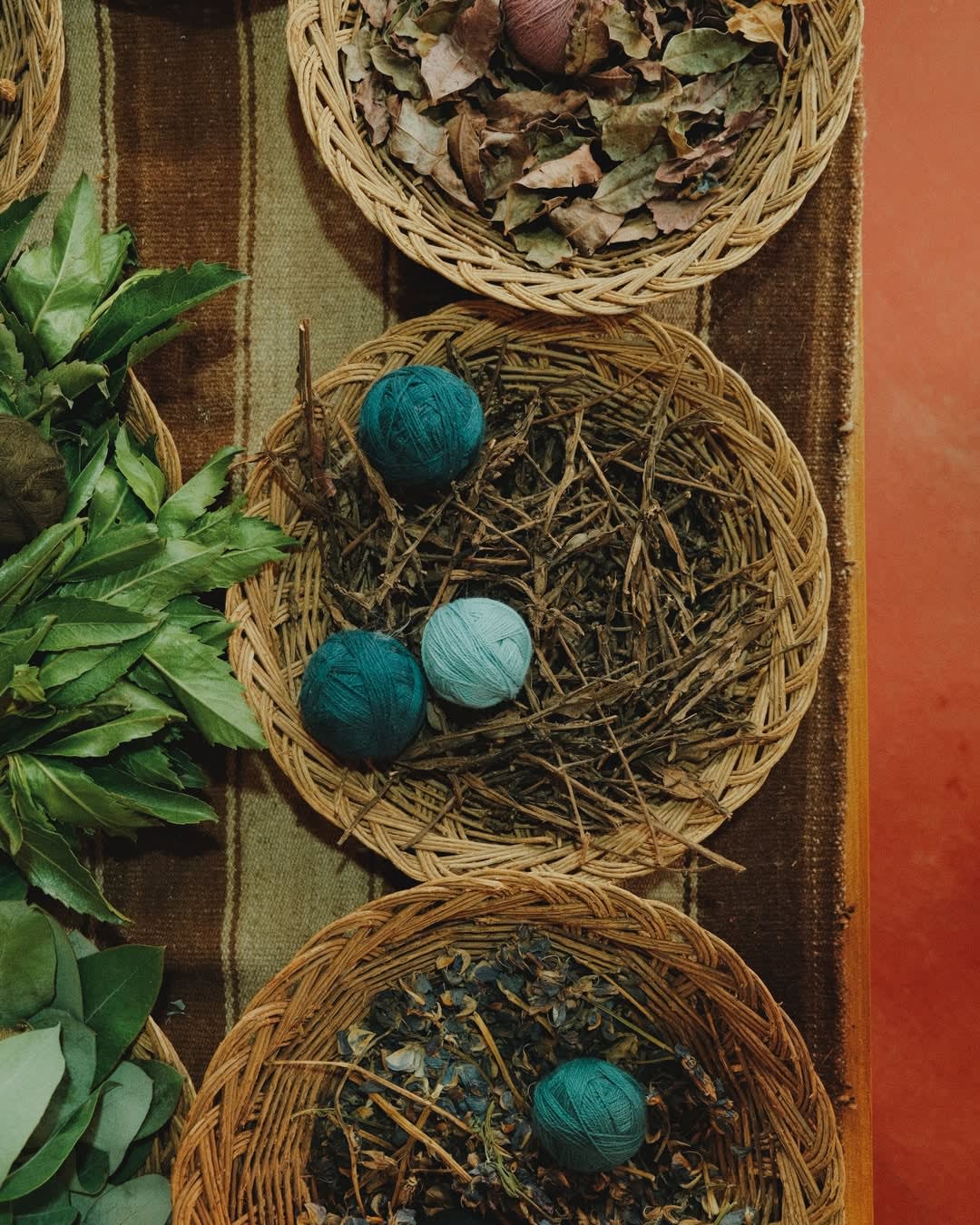
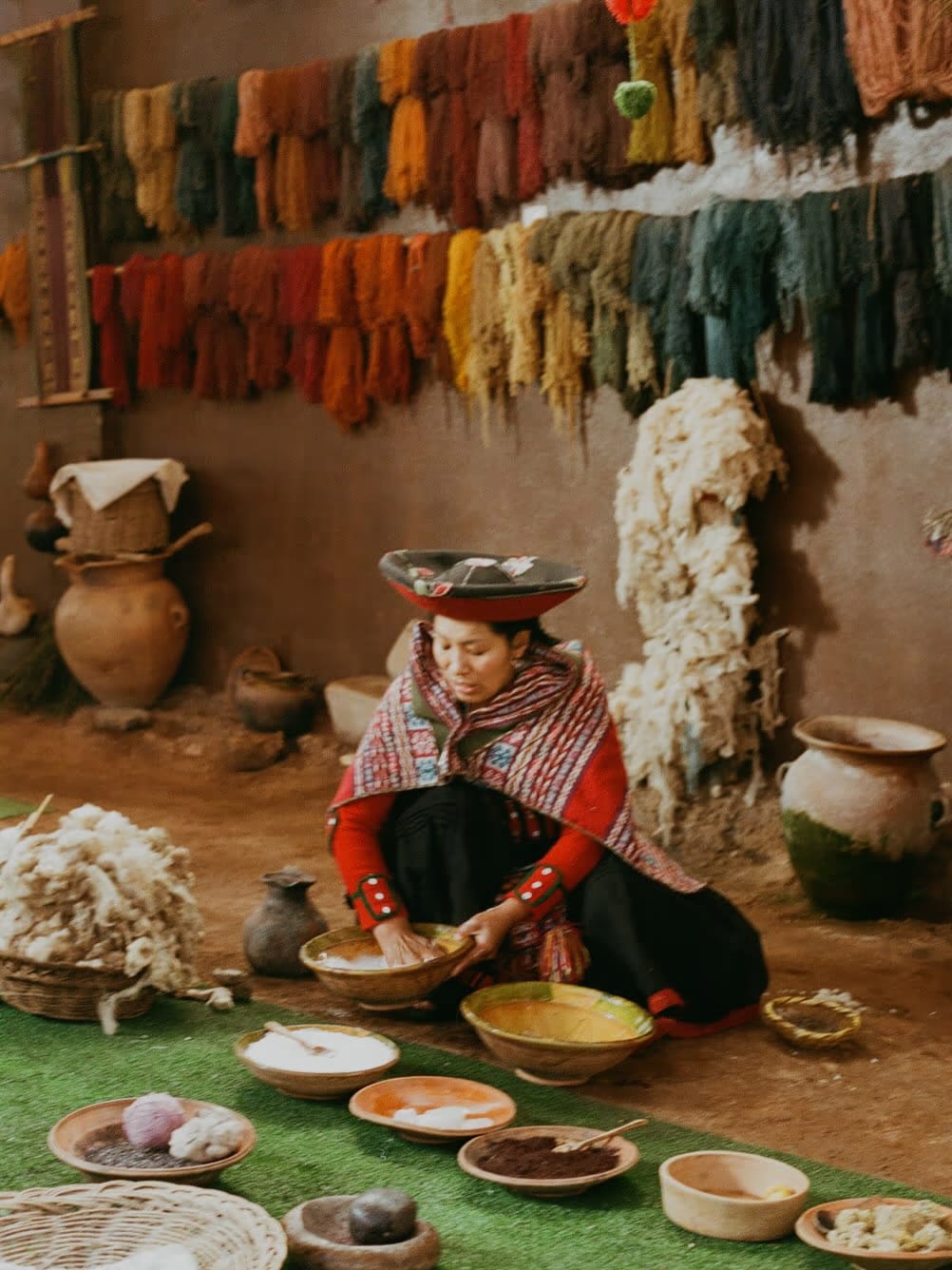
The natural dye is the most visually striking moment. Local plants (chilca, qolle, queñual) and cochineal (insect living on prickly-pear cactus) are boiled in water to produce vivid colours. The weaver shows the thread colour change in real time.
The backstrap loom is the central piece. The weaver sits on the floor with the loom tied to her waist and a post, and begins weaving a pattern with mathematical encoding (each pattern has specific mythological meaning). Here the visitor can try weaving a row —humble experience demonstrating the trade's complexity.
The visit ends with direct purchase. Quality textiles cost USD 80-280 (headband with Andean motifs), USD 280-580 (baby-alpaca shawl), USD 580-1,200 (ceremonial poncho with complete pre-colonial technique).
Premium community tourism is not night in peasant home without hot water. It is four hours in weaver's workshop, with direct purchase from producer, return to hotel for dinner. What matters is the quality of the encounter.
Kada Travel
How they are booked
Visits are booked two to three weeks ahead. Cost: USD 180-280 per person, includes cultural interpreter, private hotel transport, lunch at host family (in Patabamba) or tea and snack (in Chinchero), and community contribution.
Textile purchase is separate from visit cost. We recommend bringing USD 200-500 in cash (weavers prefer cash to card) if quality pieces are wanted.
What is not premium community tourism
Three categories the traveller must distinguish.
First: the 30-person tourist-bus visit, where the "weaver" is hired by the agency to do 15-minute demonstration and the textiles for sale are industrial. Not community, just stagecraft.
Second: the night in peasant home without quality filter. Some operators sell "authentic experience" without verifying home cleanliness, food quality, or basic services. For our travellers, we always recommend day visit with return to five-star hotel.
Third: the Sunday Pisac market purchase. Although it has authentic textiles, the atmosphere is more commercial than cultural. To understand Andean textile, the community visit is indispensable.
Written by Kada Travel Editorial
Frequently Asked
Yes, definitely. Difference between tourist-bus visit (USD 35) and premium (USD 220) is group (30 vs 6), time (45min vs 4h) and language (no interpreter vs cultural interpreter).
For our travellers, payments are made at end of visit in cash, directly to the weaver or association. No intermediary.
Few. The Andean textile tradition is predominantly female. The few male weavers work mainly in Taquile (Lake Titicaca), not Sacred Valley.
May-October due to dry season. Weavers work outdoors and rain complicates demonstration. Other months are workable but less comfortable.
Yes, children over 6. The visit is interactive and children can try spinning or loom. For younger children, attention may be short.
A small piece with complete technique: headband (USD 80-280) or chuspa (USD 150-380). Took the producer 2-3 weeks to make. Memorable gift.
Design Your Journey
Design your bespoke Peru journey
We talk. We listen. Then we design an itinerary that belongs only to you.
Start Planning