Unfolded· 6 min read·29 July 2026
The Island Rebuilt Before It Sinks
A private morning on the Uros floating islands with a family who explains, honestly, what most visits skip: these islands are not permanent — they are rebuilt from reed, continuously, for as long as anyone can remember.
By Kada Travel Editorial
The Uros islands are, by some measures, the most photographed sight on Lake Titicaca and, by others, the most misunderstood. Most visits are brief — a large tour boat, a short stop, a demonstration pitched at a group rather than a conversation, and a departure before the more interesting question ever gets asked: what is actually holding these islands up, and why don't they simply sink?
We arrange something narrower and slower: a private visit to a single family's island, with time enough for the conversation the standard stop doesn't allow.
What an Island Actually Is
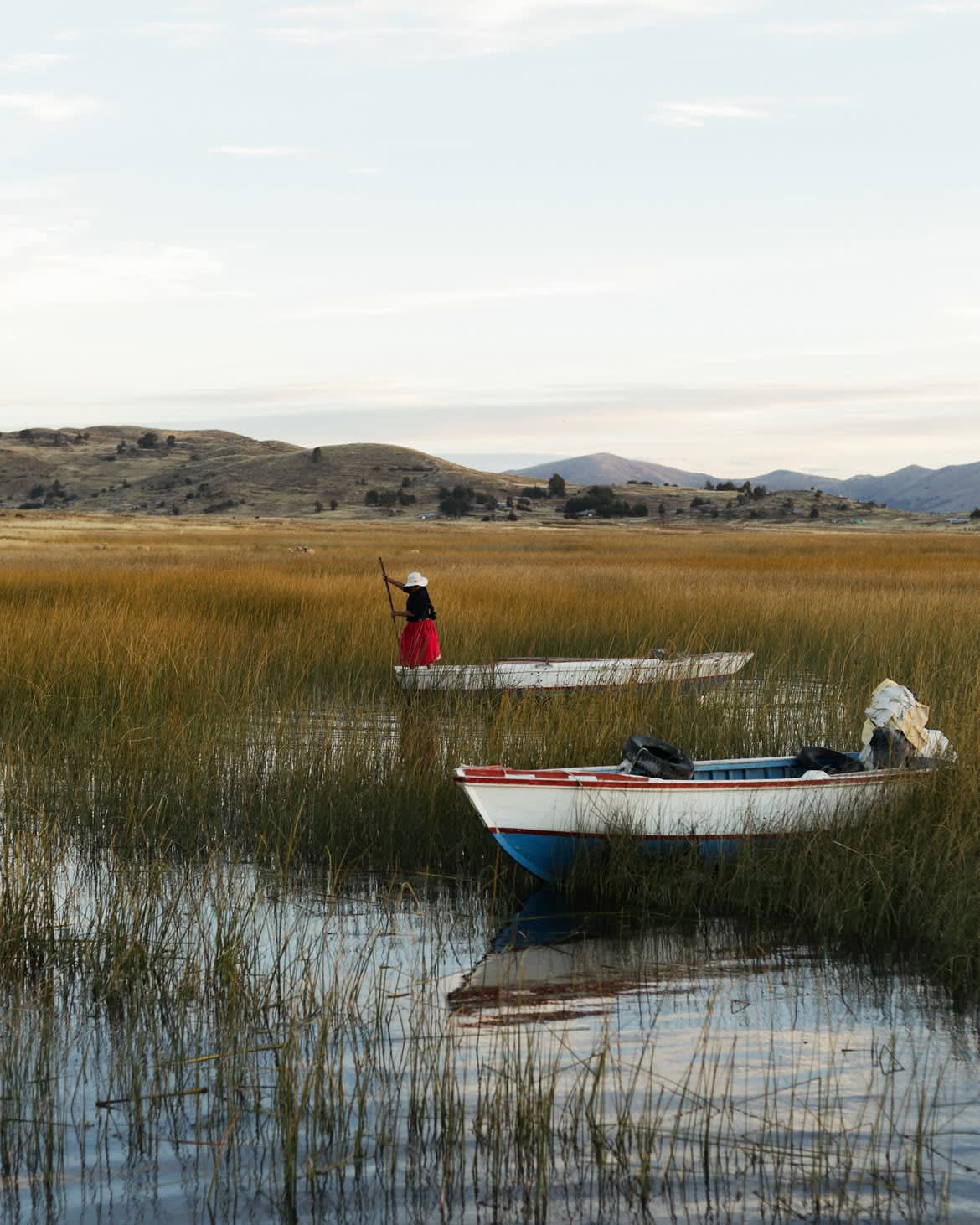
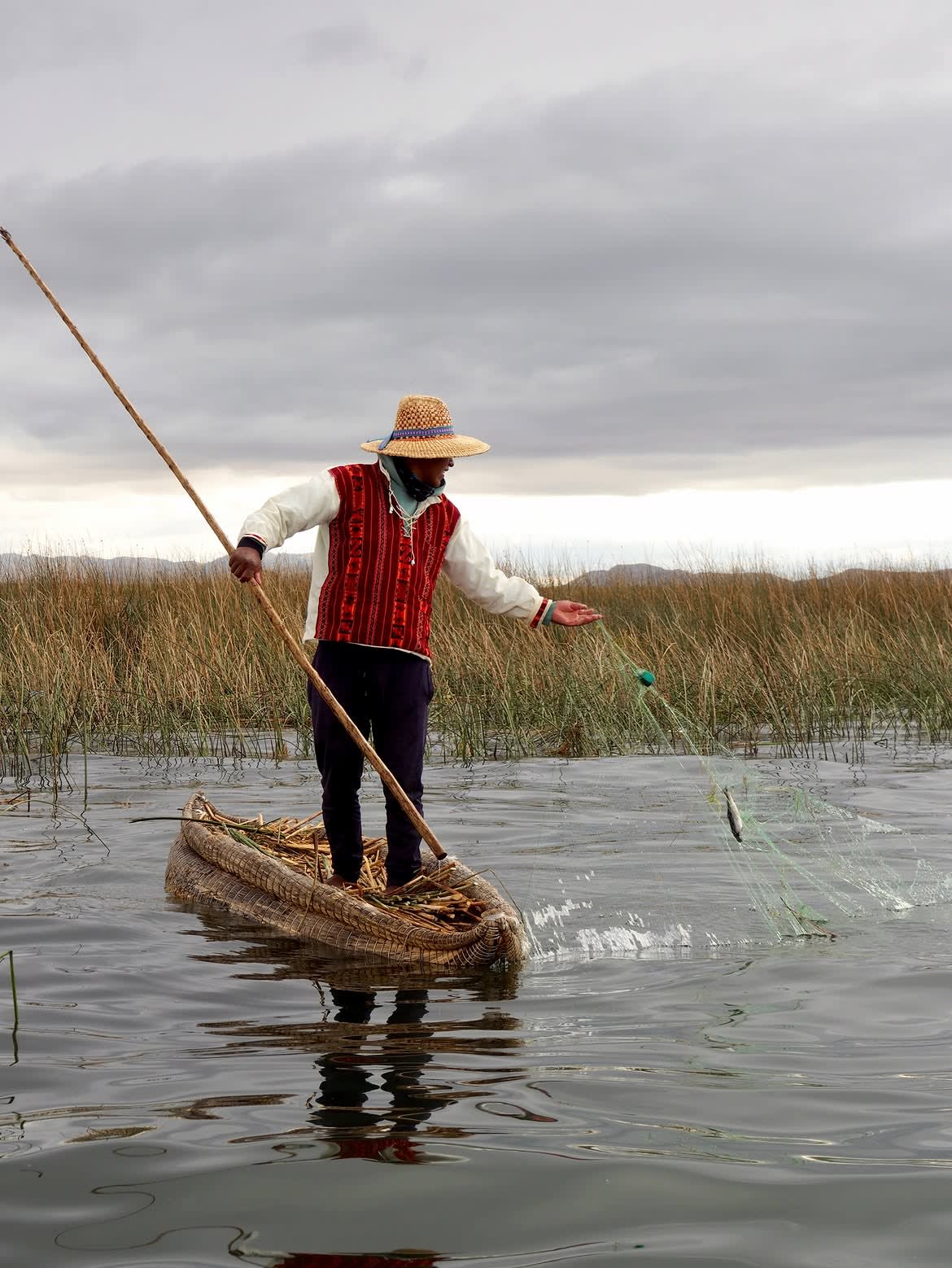
The islands are built from totora, a reed that grows abundantly in the shallows of Lake Titicaca, layered in a specific and labour-intensive construction: a base of dense root mats cut and floated into place, then successive layers of cut reed laid perpendicular to the layer beneath, built up until the platform is stable enough to walk, build on, and live on. The islands are anchored to the lakebed with ropes but otherwise float freely on the layered reed base.
The construction is not a one-time event. Reed decomposes from below as it sits in the water, which means every Uros island requires fresh reed laid on top on a rolling basis — roughly every two weeks for routine maintenance, with a more substantial rebuild required every twenty to twenty-five years as the underlying structure eventually becomes too degraded to maintain. An island, in other words, is less a place than a practice — continuous work that has to happen or the ground beneath a family's home simply stops existing.
A Culture Built Around an Unusual Premise
The Uros people's presence on the lake predates the Inca, and the traditional account — debated in its exact historical details but consistent across generations of oral history — holds that the islands were built specifically as a defensive strategy, allowing communities to move their entire settlement across open water if threatened, a mobility no land-based village could match. Whatever the precise origin, the islands today house working communities: families who fish, who weave reed into boats and crafts, and whose relationship to totora extends well past construction into food (the plant's white base is edible) and daily material culture.
Why the Standard Visit Misses This
The large-group tour stop tends to present the islands as a static curiosity — a platform to stand on, a demonstration of how reed is layered, a chance to buy a craft, and a departure. What it rarely has room for is the honest, harder conversation: how tourism itself has changed the islands' economy and daily rhythm, which families have leaned into visitor income and which have deliberately kept their islands away from the main tourist routes, and what daily life on a structure that requires this much ongoing labour is actually like.
What Kada Arranges
We work with one family whose island sits away from the primary tour-boat routes, allowing an unhurried morning rather than a twenty-minute stop shared with several other boats. The visit includes time to see the reed-layering process directly — sometimes as an active demonstration if maintenance work happens to be underway that day — and an honest conversation, through a guide who translates as needed, about the realities of island life, not a performance calibrated for a large group.
Expert Insight
"We think the most interesting thing about Uros isn't the novelty of floating on reed — it's that an entire culture organised itself around a structure that requires constant renewal to keep existing. That's not a metaphor we impose on it; it's literally true, every two weeks, for as long as anyone living there can remember. Once guests understand that, the visit stops being a curiosity stop and becomes something closer to witnessing an ongoing act of maintenance that never really finishes."
— Isabela Santos, Travel Designer, KADA Travel
A Practical Note
The islands' surface has some give underfoot — comparable to a dense, springy mat rather than solid ground — which most guests adjust to within minutes but is worth knowing in advance, particularly for guests with balance concerns. We coordinate directly with the family in advance rather than arriving unannounced, which is both more respectful and more reliable than an ad hoc stop.
Written by Kada Travel Editorial
Frequently Asked
Substantially — we arrange a private visit with one family away from the main routes, with real time for conversation rather than a brief, crowded stop.
Typically two to three hours, including the boat transfer from Puno.
Yes, for many families, though the balance between traditional island life and life on the mainland varies by family and has shifted as tourism income has become more significant to some households.
Yes — it pairs naturally with a longer day that includes Taquile or another island further from Puno, though we'd recommend not compressing both into a single rushed day.
Design Your Journey
Design your bespoke Peru journey
We talk. We listen. Then we design an itinerary that belongs only to you.
Start Planning