Unfolded· 7 min read·30 July 2026
The Festival That Turns a City Into a Stage
Private access to Puno's Virgen de la Candelaria — the largest folk-religious festival of its kind in Peru, UNESCO-recognised, when tens of thousands of dancers and musicians fill the city for two weeks in February.
By Kada Travel Editorial
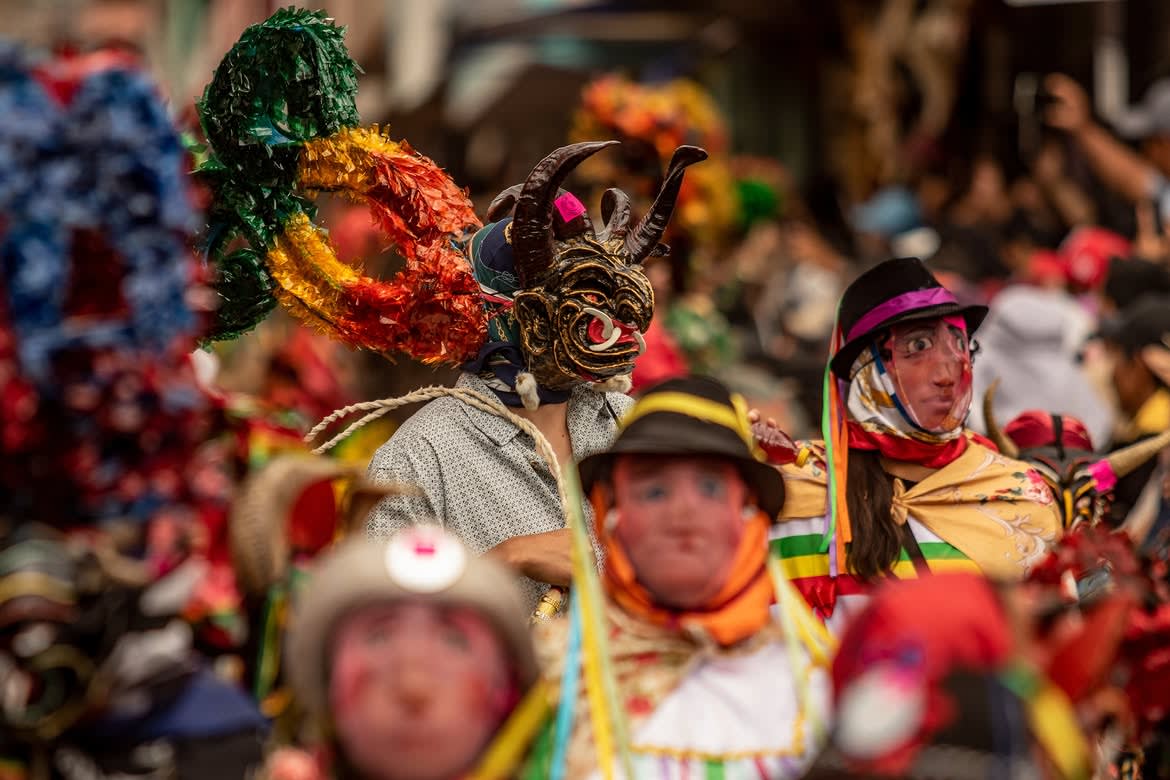
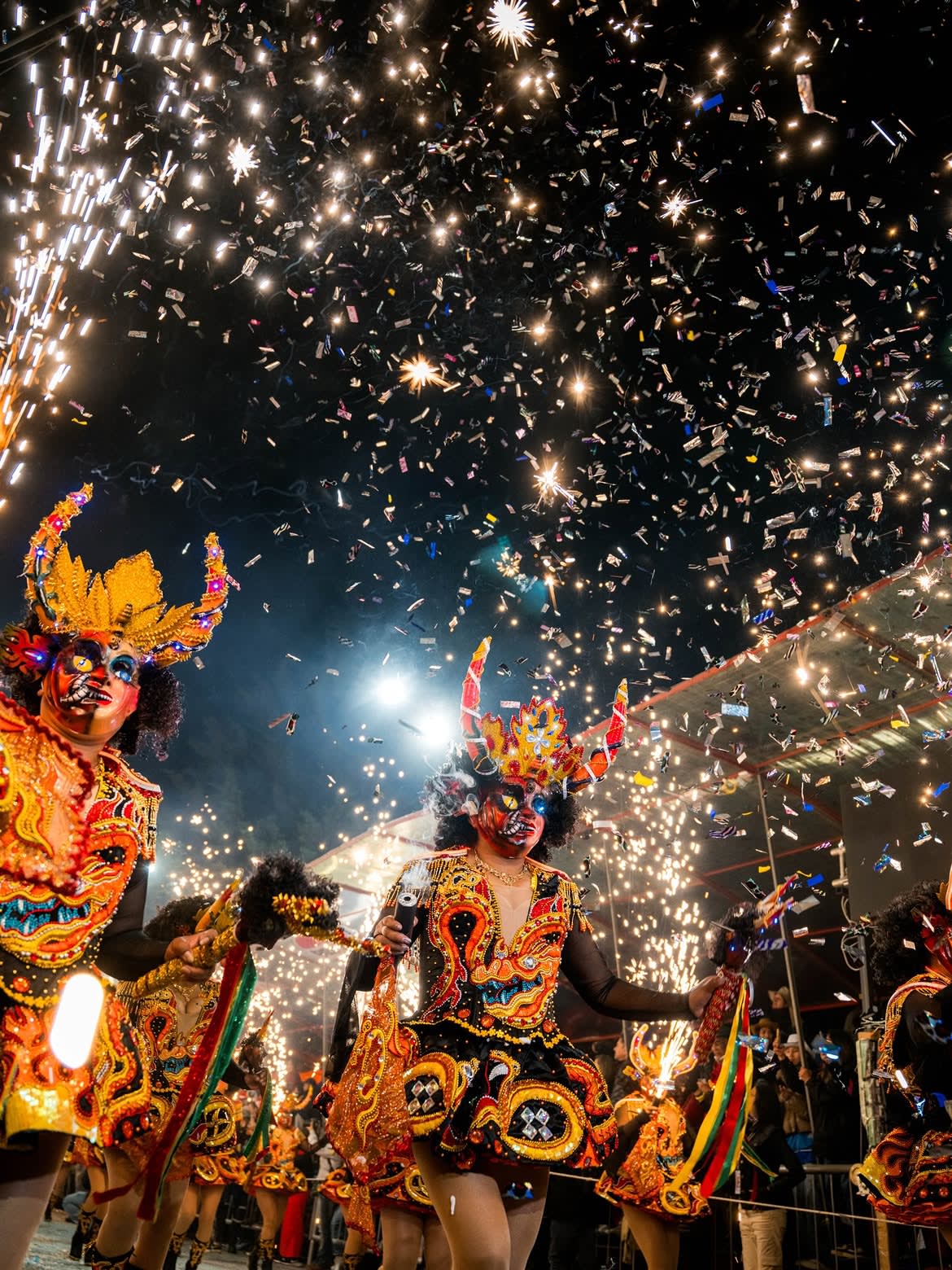
For two weeks each February, Puno stops being a lakeside city that visitors pass through on the way to Titicaca and becomes, instead, one of the largest stages for folk religious celebration anywhere in the Americas. The Virgen de la Candelaria — recognised by UNESCO as Intangible Cultural Heritage of Humanity — brings tens of thousands of dancers and musicians, organised into dozens of troupes representing distinct traditional dances, through the city's streets and central stadium in a celebration that fuses Catholic devotion with pre-Columbian ritual in a combination found almost nowhere else at this scale.
Most visitors who happen to be in Puno during Candelaria experience it as an overwhelming, disorienting crowd event — which, without context or positioning, it genuinely can be. What we arrange is different: a considered vantage, informed context, and a schedule built around the festival's actual structure rather than a single confused afternoon in the crowd.
What Is Actually Happening
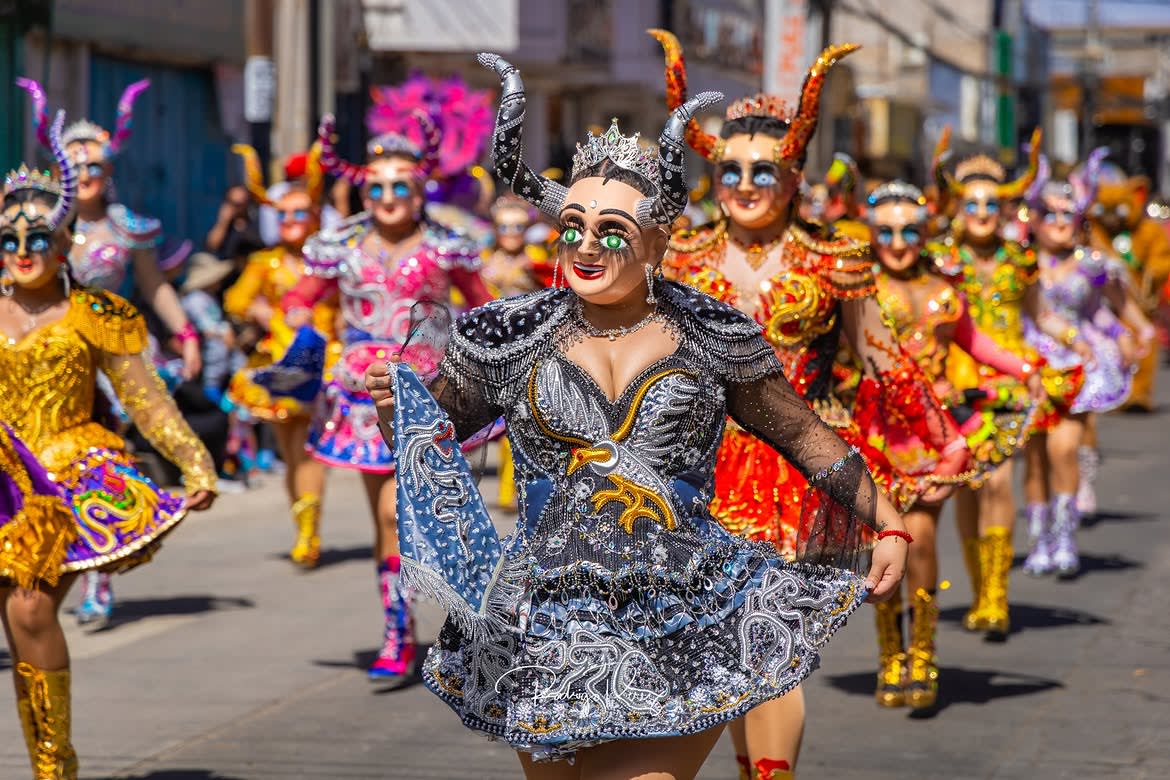
Candelaria centres on devotion to the Virgin of Candlemas, but its expression runs through an extraordinary range of dance traditions, each with distinct costume, choreography, and origin — some rooted in colonial-era satire of Spanish rule, some in pre-Inca agricultural and pastoral ritual, some explicitly telling stories of the Spanish conquest through masked, theatrical performance. The diablada — the devil dance, with elaborate and genuinely startling masks — is the best known internationally, but it is one dance tradition among dozens competing and performing across the festival's full span.
The festival unfolds in stages: religious processions honouring the Virgin, competitive dance parades through the city's streets, and a large-scale contest at Puno's stadium where troupes representing different traditions and communities perform in full costume for judged evaluation — a genuinely serious competition, not a tourist pageant, with troupes rehearsing for months beforehand.
Why Positioning and Context Matter
Without local knowledge, a visitor arrives, finds a spot in a dense crowd, watches an hour or two of parade with limited understanding of what distinguishes one dance tradition from another, and leaves without much beyond photographs. With the right positioning — arranged in advance, in locations that offer both visibility and some breathing room from the densest crowd — and a guide able to explain what's actually being performed and why, the same hours become considerably richer: recognising which troupe represents which specific dance tradition, understanding the religious versus satirical layers within the choreography, and following the arc of a celebration built over centuries rather than watching an undifferentiated stream of costume and noise.
What Kada Arranges
We time visits to Candelaria specifically around its two peak weekends — the initial days of religious procession and the stadium competition — and arrange positioning that balances a genuine view with a manageable crowd density, something that requires local relationships and advance planning given how full Puno becomes during the festival. We pair this with a guide who can explain the specific dance traditions on view that day, and, where possible, arrange a conversation with a troupe member or organiser before or after their performance — access that requires real local connection rather than showing up and hoping.
Expert Insight
"Candelaria is not an easy festival to visit well — it is loud, dense, and genuinely chaotic if you arrive without a plan. But arranged properly, it is one of the most extraordinary things we show guests anywhere in Peru: a city of seventy thousand nearly doubling in size for two weeks, entirely in service of a celebration that layers five centuries of history into a single dance. We do not oversell the comfort of it. We do promise that it will not be confusing."
— Gustavo Arenas, Travel Director, KADA Travel
A Practical Note
Accommodation in Puno during Candelaria books far in advance and at a premium — we recommend confirming a February visit at least six months ahead. Crowds are genuinely dense; guests should expect close contact, noise, and long stretches on foot, and we brief accordingly. This is not a quiet, contemplative experience in the way most of our Titicaca offerings are — it is a full-sensory immersion, and we position it honestly as exactly that.
Written by Kada Travel Editorial
Frequently Asked
The core celebration runs for roughly two weeks around February 2nd (the feast of Candlemas), with the main parades and stadium competition typically falling on the two weekends closest to that date — the exact calendar shifts slightly year to year.
The crowds and noise are significant; we assess each guest's tolerance for a dense, loud environment before recommending specific viewing arrangements, and can select quieter vantage points for guests who want to experience the festival with less physical intensity.
As early as possible — ideally six months or more ahead, given accommodation scarcity and the advance coordination required for good positioning.
Yes, though we'd recommend building the itinerary around Candelaria as the primary focus during festival weeks, with island and community visits scheduled either before the festival begins or in its quieter middle days.
Design Your Journey
Design your bespoke Peru journey
We talk. We listen. Then we design an itinerary that belongs only to you.
Start Planning