Unfolded· 7 min read·20 July 2026
The Port Lima Spent Three Centuries Trying to Forget
A colonial fortress, a Belle Époque peninsula, and a hillside where the murals are rewriting the city's most overlooked district — twenty minutes from Miraflores, and rarely on an itinerary.
By Kada Travel Editorial
Every itinerary that lands in Lima passes through Callao without stopping. The airport sits inside its boundaries. Guests are driven past its port cranes and its container yards on the way to Miraflores or Barranco, and Callao becomes the twenty minutes you endure before the trip properly begins.
That is a significant miscalculation, and one we have spent years correcting for the guests willing to be told so.
Callao is not an appendix to Lima. It is, in the strict historical sense, older than Lima's identity as the city travellers know today — the port through which the Spanish Crown moved the silver of an empire, the site of a 1746 earthquake and tsunami so total it erased the original town entirely, and the place where Peru later fought, twice, to keep its independence from being reversed by sea. Lima looked inward and became a capital of plazas and balconies. Callao looked outward and took the damage.
The Fortress Built After the City Was Erased
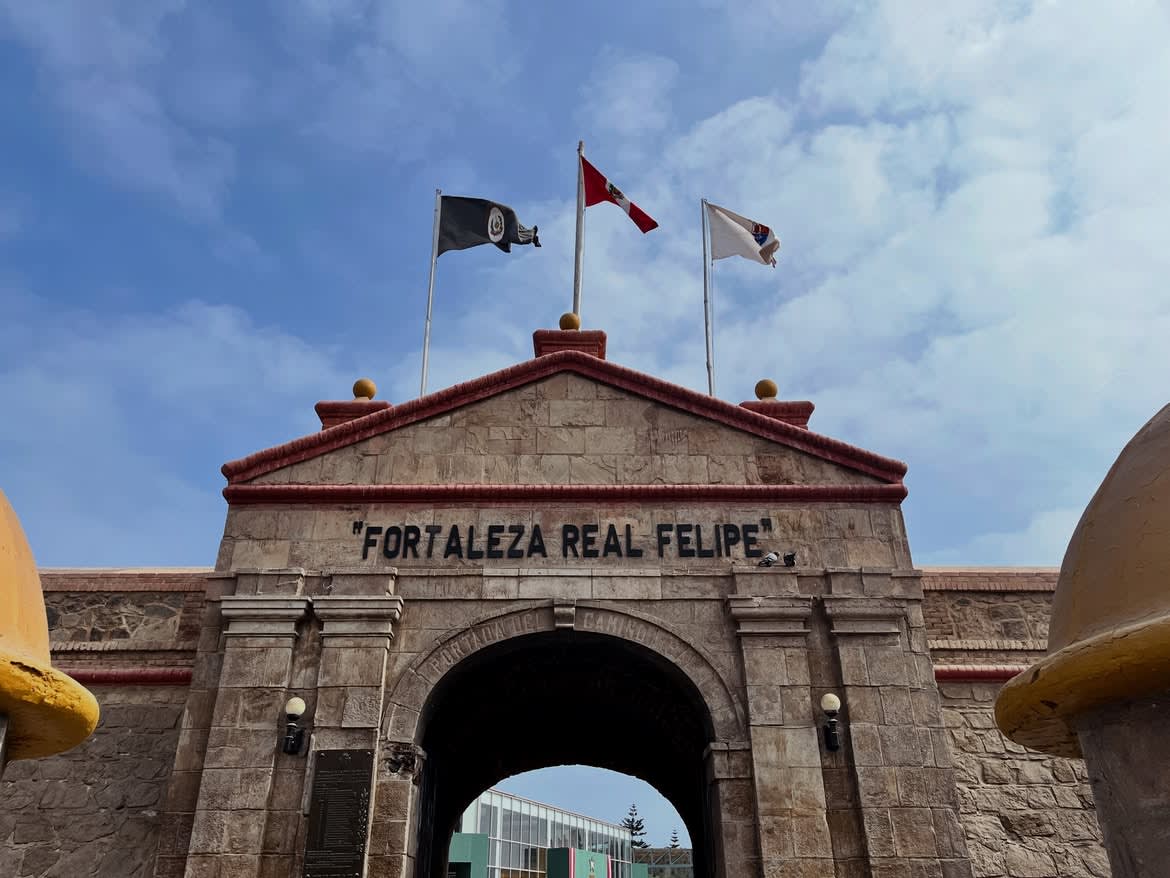
Real Felipe was constructed from 1747, in the years immediately following the earthquake and tsunami that destroyed Callao's original settlement so completely that Spanish colonial records describe streets simply vanishing into the sea. What rose from that erasure is considered the largest and best-preserved Spanish colonial fortress in South America — a star-shaped complex of thick stone ramparts, moats, and bastions engineered to withstand a siege that, eventually, it did: the 1866 Combate del Dos de Mayo, when Peruvian forces defended the fortress against a Spanish fleet attempting to reassert control over its former colony, one of the decisive engagements that confirmed Peru's independence was not going to be reversed by force.
Walking the ramparts today, guided by a naval historian rather than a general-interest guide, the fortress stops reading as a static monument and becomes something closer to a physical argument: every angle of the walls, every placement of the cannon emplacements, answers a specific tactical question about eighteenth-century siege warfare. The dungeons where prisoners were held during the republican era — used, later, as a detention site during periods of political conflict — add a second, more uncomfortable layer to a site that is rarely presented with that complexity intact.
The Peninsula That Faces the Sea on Three Sides
A fifteen-minute walk from the fortress, across a stretch of Callao that still reads as working port town, La Punta is a different register entirely. The peninsula narrows to a thin finger of land with the Pacific on three sides, and the streets slow accordingly — low Belle Époque and Neoclassical mansions from the early twentieth century, many still in single-family hands, a malecón where the waves arrive close enough to read individually rather than as a general roar. The Escuela Naval del Perú, Peru's naval academy, occupies a significant stretch of the peninsula, giving La Punta a quiet, institutional calm that Lima's better-known coastal neighbourhoods have long since traded for restaurant terraces and surf shops.
We walk La Punta with a resident historian whose own family has lived on the peninsula for three generations — someone who can point to a specific balcony and explain which admiral lived behind it, rather than gesturing at the architecture in general terms. It is, structurally, the version of coastal Lima that existed before Miraflores and Barranco became the postcard.
The Hillside Where the City Started Painting Back
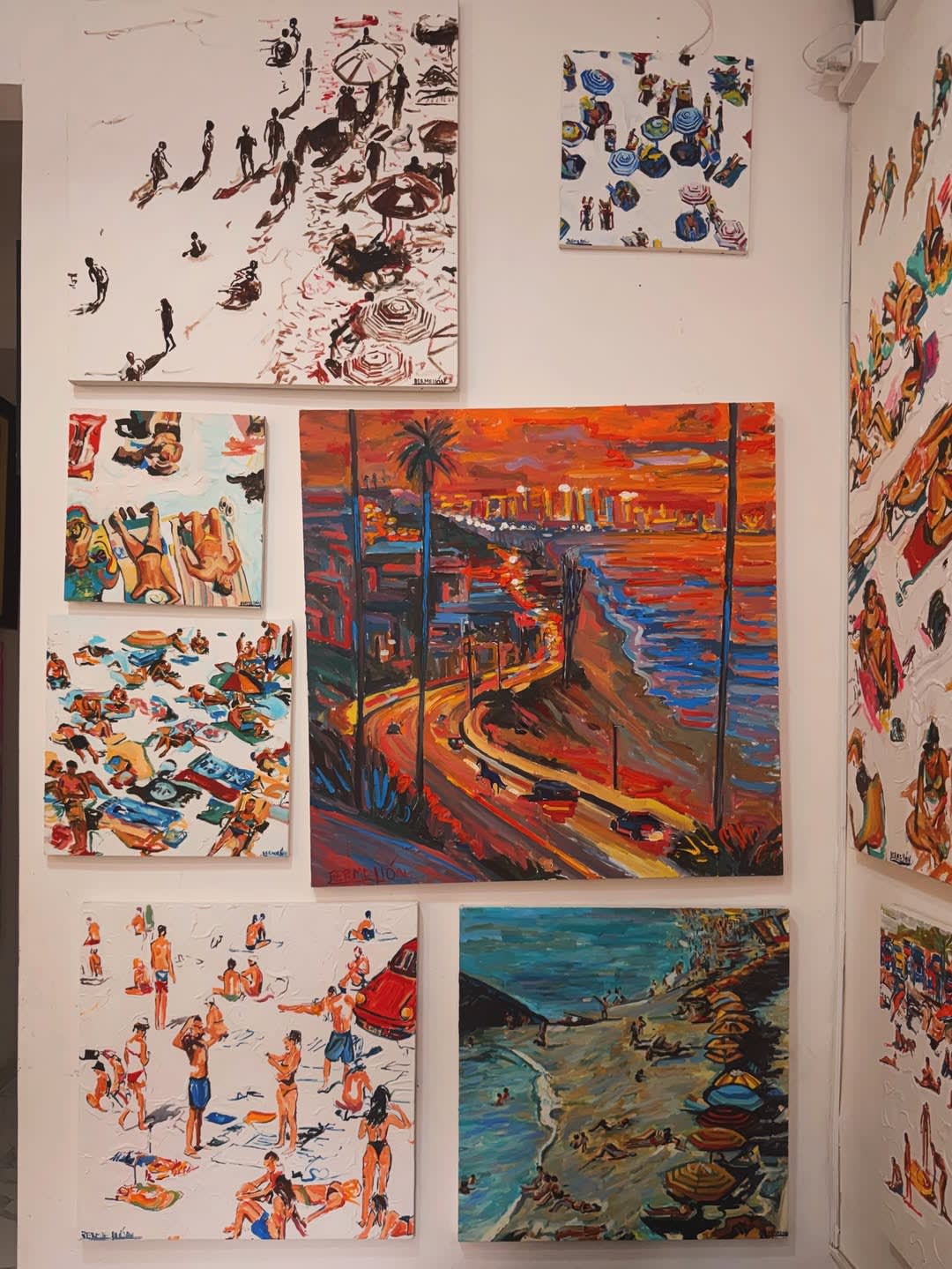
Chucuito rises on a hill above Callao's port, a neighbourhood whose reputation for decades kept it entirely off the map for visitors. What has changed, over roughly the last ten years, is a mural movement — Peruvian and international street artists using Chucuito's densely packed, brightly painted houses as a canvas that now rivals anything in Valparaíso or Guatapé, executed at a scale and density that a single street or plaza cannot approximate. The murals are not a tourism initiative dressed up after the fact; they emerged from residents and collectives working with the neighbourhood's own visual language, and the result reads as authored rather than commissioned.
We arrange the walk with a member of one of the muralist collectives working in the district — someone who can explain which walls are recent, which have been repainted over older work, and what a specific piece is actually depicting, since much of the imagery draws on maritime and Afro-Peruvian references specific to Callao's own history rather than generic street-art motifs imported from elsewhere.
What Kada Arranges
We build Callao as a single, dedicated half-day or full-day from central Lima — not a stop en route to somewhere else, which is the framing that has kept it off itineraries for a generation. A private guide with the naval historian's context opens the fortress; a resident of La Punta closes the loop on the peninsula's own social history; a muralist or collective member walks Chucuito's hillside on foot, at a pace that lets our guests actually read the work rather than photograph it in passing.
For guests interested in Callao's contemporary food scene — a handful of picanterías serving the kind of coastal Peruvian cooking that predates Lima's tasting-menu era by a century — we can close the day with a lunch that has nothing to do with a reservation list and everything to do with a family that has run the same kitchen since the 1960s.
Expert Insight
"Callao is the district our guests are most surprised by, and it is not close. They arrive expecting a stop on the way to the airport and leave asking why nobody told them sooner. The fortress gives you the history most of Lima has forgotten it survived; La Punta gives you the calm Lima had before it became a capital of five-star hotels; Chucuito gives you a city actively rewriting its own reputation, one wall at a time. That range, in a single afternoon, twenty minutes from Miraflores — we don't have anything else quite like it."
— Gustavo Arenas, Travel Director, KADA Travel
A Practical Note
Callao's reputation for safety has historically been a legitimate concern in specific pockets of the district, and we do not pretend otherwise. The areas we route guests through — Real Felipe, La Punta, and the specific mural circuit in Chucuito — are selected and guided precisely because they avoid that risk, with a private vehicle and local guide at every stage. We do not arrange independent, unguided visits to Callao, and we would advise against them.


Written by Kada Travel Editorial
Frequently Asked
With the right guide and routing, yes — the experience we arrange stays within areas that are well understood and consistently safe for the specific circuit we use. Independent exploration is a different question, and one we would discourage.
A half-day covers the fortress and La Punta comfortably. Adding the Chucuito mural walk and a lunch stop makes it a full day — the version we recommend for guests with a genuine interest in the district rather than a passing one.
We generally recommend Callao as its own day rather than pairing it with a second major experience — the district rewards unhurried time, and compressing it tends to shortchange all three of its distinct registers.
Real Felipe involves uneven stone surfaces and some stairs within the fortress; La Punta's malecón is flat and easily walked. Chucuito's hillside streets are steep in places. We can adjust the circuit for guests with specific mobility needs — let us know in advance.
Design Your Journey
Design your bespoke Peru journey
We talk. We listen. Then we design an itinerary that belongs only to you.
Start Planning