Unfolded· 6 min read·23 July 2026
The Fortress Above the City
A private early-morning walk through Sacsayhuamán, the megalithic zigzag ramparts above Cusco — stones fitted so precisely that no mortar was ever needed, and the ceremonial ground where Inti Raymi still unfolds each June.
By Kada Travel Editorial
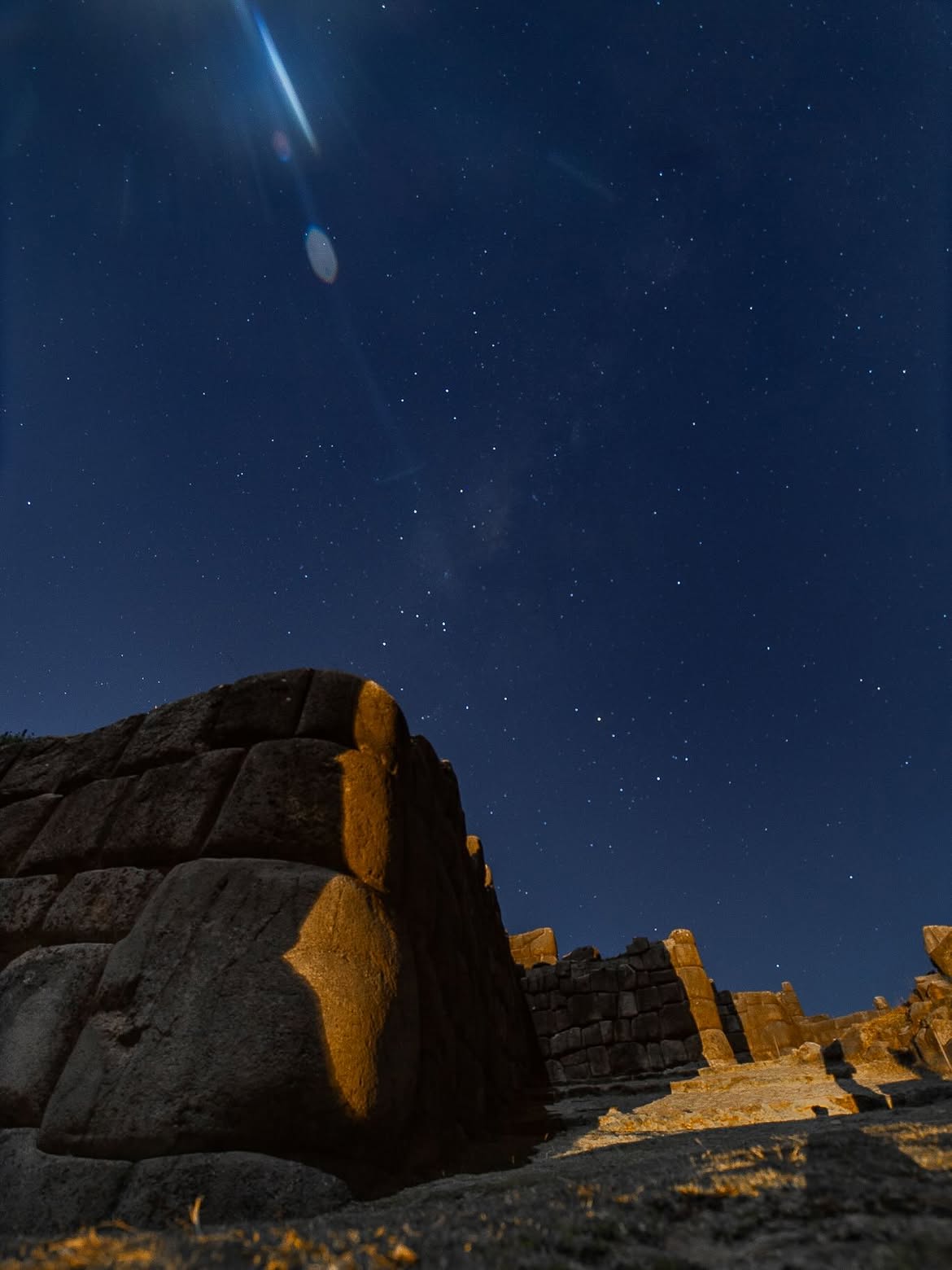
Above Cusco's historic centre, a fifteen-minute walk or short drive up from the Plaza de Armas, Sacsayhuamán's ramparts rise in a series of zigzagging stone walls built from blocks that, in places, weigh well over one hundred tonnes — cut and fitted with a precision that requires no mortar to hold, joints so tight that a blade genuinely cannot be worked between many of the stones, a level of stonemasonry that continues to draw serious engineering and archaeological study centuries later.
What the Site Actually Was
Long popular narrative has labelled Sacsayhuamán a fortress, and its defensive utility during the Spanish conquest — when Inca forces made a documented, significant stand here against Spanish troops in 1536 — is well established. Current archaeological understanding treats the site as considerably more than military architecture, however: a ceremonial and religious complex of major significance within Inca Cusco, its layout and scale suggesting a role in state ritual as much as defence. We present this complexity honestly rather than reducing the site to a single narrative.
Why the Hour Matters
Sacsayhuamán receives significant daytime crowds, particularly from group tours combining it with other nearby sites on a fixed schedule. An early-morning visit — before the site's main gates see heavy traffic — offers a genuinely different experience: quiet enough to properly appreciate the scale and precision of the stonework, with morning light raking across the zigzag walls in a way that brings the joinery into sharper relief than the flatter light of midday.
A Living Ceremonial Ground
Sacsayhuamán's esplanade remains the site of Inti Raymi, the reconstructed Inca festival of the winter solstice, held each June 24th with major ceremony, performance, and civic participation — one of Cusco's most significant annual events. Outside the festival itself, the site's continued ceremonial use across the year underscores that this is not a purely historical ruin but a place still woven into Cusco's civic and cultural calendar.
What Kada Arranges
We arrange a private early-morning visit with a guide specialising in Inca military and ceremonial architecture, timed to beat the day's larger tour groups. For guests visiting around June 24th, we can build an itinerary specifically around Inti Raymi, securing appropriate viewing arrangements for a genuinely major civic event.
Expert Insight
"Most guests see Sacsayhuamán as a stop on the way to something else — a quick photo of the big stones before the bus moves on. We think it deserves an hour of its own, ideally before the crowds, because the precision of this stonework is something you actually need quiet, close attention to appreciate properly."
— Daniel Ramos, Co-Founder & CEO, KADA Travel
A Practical Note
The site sits at higher elevation than central Cusco and involves walking across open, uneven ground — appropriate acclimatisation is recommended before this visit, as with most Cusco-area experiences.


Written by Kada Travel Editorial
Frequently Asked
Timing and depth — we arrange an early, unhurried private visit with a specialist guide rather than a brief stop shared with a large group.
Yes, Sacsayhuamán is typically part of that broader circuit, but we arrange our visit independently for better timing and pacing.
Yes, for guests visiting around June 24th — we arrange appropriate access and viewing for this major annual festival.
Roughly ninety minutes for an unhurried private walk with a specialist guide.
Design Your Journey
Design your bespoke Peru journey
We talk. We listen. Then we design an itinerary that belongs only to you.
Start Planning